
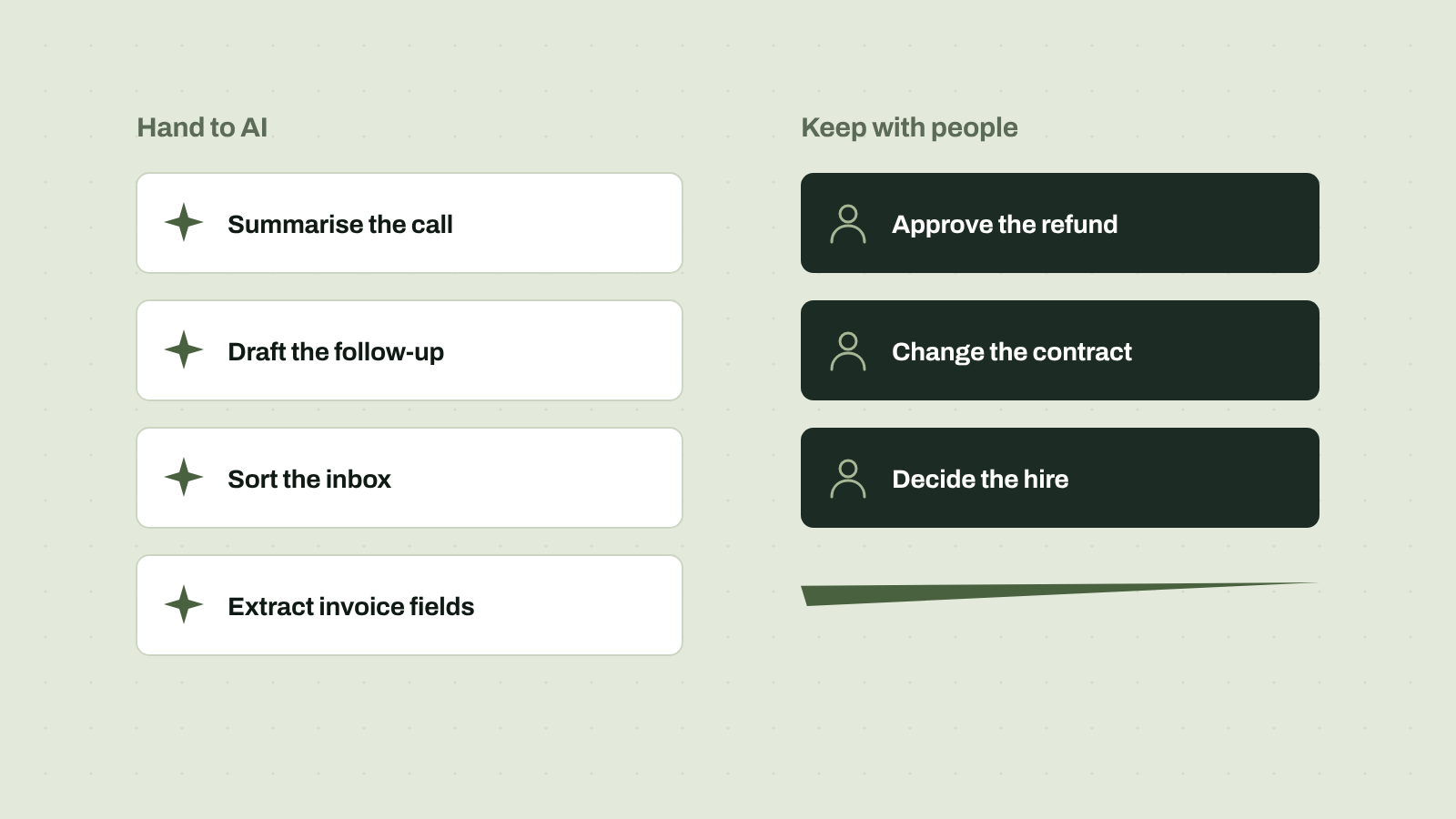
Most of the value of AI in a small or mid-sized business is not in a chatbot. It is in the dull middle of everyday work: reading, summarising, drafting and sorting.
Jobs worth handing over
- Summaries. Turning a call recording or a long email thread into five lines and a list of actions.
- First drafts. Follow-up emails, proposals and status updates, written from notes for a person to edit.
- Sorting. Reading incoming messages and routing them to the right queue with the right priority.
- Extraction. Pulling names, dates and amounts out of documents and into the right fields.
Jobs to keep with people
Anything that commits the business: approving a refund, changing a contract, making a hiring decision, giving advice a client will act on. AI can prepare the decision. A named person should make it.
Three rules that prevent most problems
- Know what data is going where. Decide in writing which information may be sent to which AI service, and check the provider’s terms on retention and training.
- Review before it leaves the building. Nothing AI-written goes to a client or into a record of consequence without a person reading it.
- Keep a log. Record what was generated, from what input and who approved it. You will want it the first time something is questioned.
Where to start
Choose one task that is frequent, tedious and low-risk, and build AI into the workflow that already exists, not into a separate window. Measure the time saved after a month. Then choose the next one. More on how we approach this under AI in operations.